Who says you can’t teach an old dog new tricks?

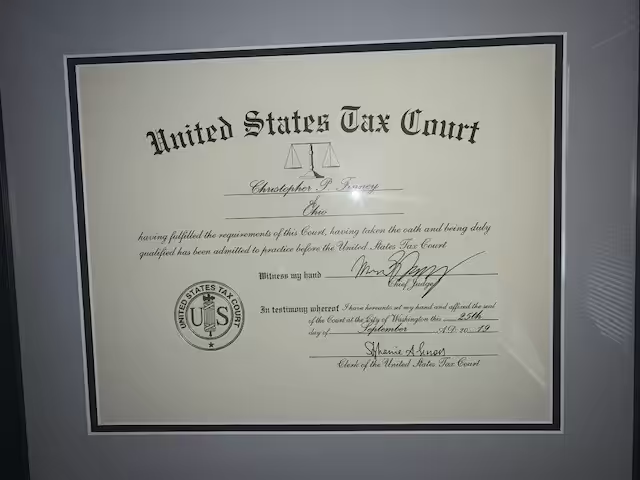
In the past year, I got two new bar admissions, the D.C. District and Bankruptcy Court and the United States Tax Court.

I obtained the Tax Court admission to help a client avoid a small tax penalty due to his securities dealer mishandling his IRA account and reporting the monies in it as having been distributed, when no such thing happened.

We won without even having a hearing, so my record is 100% before the Federal Tax Court. If I never file anything there again, I might keep that perfect record!

In any event, I have another certificate for my wall. Thanks to Diane Finney for keeping me looking sharp!

Ivy Pointe Title is actively pursuing Remote Online Notarization (“RON”) in order to effectively and conveniently conduct closings during the COVID-19 crisis.

What is a Remote Online Notary (RON}?

First, understand what this revolutionary technology means: With e-signature and e-notary, original inked documents will no longer be required; everything can be signed through on-line execution.  A buyer on his computer in one place can sign all of his closing documents, including the mortgage and other documents that need to be acknowledged (notarized) in his living room or home office, with a remote notary public sitting at a desk in another location. Similarly, a seller sitting in his kitchen at home can sign the deed and have it acknowledged (notarized) by an on-line notary sitting at his desk in another location. The Seller can likewise sign all of his other closing documents from his living room.  Disbursements can be via wire transfer, mailed or hand-delivered checks. In other words, every single document (including the deed and mortgage) can be signed by a party without leaving his home, and without a notary public physically (but rather virtually) present.

Where are we today?

We are in discussions with our underwriters, lenders and Realtors to comply with all RON laws, mandates and edicts.  Rather than being “first” to the table with this ground-breaking technology, we want to make 100% sure we can do this correctly when we do launch.

We will keep you informed of each step as we navigate these new uncharted waters.  In the meantime, check out this new American Land Title Association (“ALTA”) bulletin:  https://www.alta.org/news/news.cfm?20200317-ALTA-Industry-Partners-Develop-Draft-Bill-to-Permit-RON-Nationwide

Expect more updates from us shortly.

Attorney Christopher P. Finney


With the raging COVID-19 crisis and its economic fallout, the question that we are fielding the past few days is:

How can I get out of my contract to do “X”?

Each of the three analyses below hinges on the language of the contract.  Thus, “it depends.”

Contract Contingencies

First, with respect to contracts to buy companies, real estate or other assets, consider the contingencies in the contract.  For example, read here and here for easy “exits” from Cincinnati Area Board of Realtors residential contracts for buyers.

“Force majeure” provisions

But what about leases, long-term supply contracts, employment contracts, construction contracts and other commercial contracts?

Many such contracts contain what is known as a “force majeure” provision that essentially contemplates precisely the situation in which we find ourselves today: Some unexpected exigency such as war, famine, or pandemic.

In its essence, a force majeure clause is a contract provision that excuses a party’s performance under a contract when certain circumstances beyond their control arise, making performance impracticable, impossible or illegal. These clauses are common in complex commercial contracts, such as a commercial lease (and we really don’t expect to actually use them).  Yet here we are and they can be a business-saving resource in determining how to proceed.

Can this provision excuse your performance and let you “get out of” a contract? Well, as you might expect your attorney to say: “it depends.”  It depends on the language of the contractual provision.

Here is a sample force majeure provision from a commercial contract:

In the event a party shall be delayed or hindered in or prevented from the performance of any obligation (other than a payment obligation) required under this contract by reason of strikes, lockouts, inability to procure labor or materials, failure of power, fire or other casualty, acts of God, disease, restrictive governmental laws or regulations, riots, insurrection, terrorism, war or any other reason not within the reasonable control of such party, then the performance of such obligation shall be excused for a period of such delay, and the period for the performance of any such act shall be extended for a period equivalent to the period of such delay.

Would such a provision allow a tenant to terminate a lease? Would it allow an employer to terminate an employment contract for a term? Would it allow a manufacturer to avoid its obligations under a supply contract?

In this contractual language, we have the specific exceptions of “disease,” “acts of God,” and “restrictive governmental laws.”   Since we have a disease that is arguably an “act of God,” and government-imposed shutdowns, it would seem that there are multiple bases upon which to argue for termination.  But there could be countervailing arguments as well.  For example, payment obligations are not excused in this sample language.

Some courts have applied force majeure clauses very narrowly, meaning that the specific occurrence has to be contemplated by a force majeure provision. Thus, is the word “disease” in your force majeure clause? Well, COVID-19 would seem to fit tightly within that definition, but does it? Hamilton County, for example, as of this writing, has no reported cases, and yet tens of thousands of people have been thrown out of work because of the fear of pandemic.

Mere diminished performance or increased expenses to perform alone likely would not be a sufficient basis to excuse performance and invoke a force majeure clause.

Business Interruption Insurance

Do you have business interruption insurance that would cover the COVID-19 pandemic consequences?

If you were prescient or cautious enough to buy business interruption coverage, that usually covers only a direct physical loss such as a fire, flood or earthquake.  Some policies require that a loss be specifically designated, while other policies have no such requirement.

  • In the case of COVID-19, it may be tough to prove a direct physical loss but what if a workplace is contaminated and unusable due to a COVID-19 outbreak?
  • Possibly, business interruption coverage could be invoked if a supplier shuts down and can’t supply product or parts due to COVID-19

Additional considerations

Before triggering contingencies, invoking a force majeure provision or making a claim for insurance coverage, consider the following:

  1. Are alternative means to perform your contractual obligations.
  2. Will the other party to the contract consider mitigation of the performance problem, such as a rent reduction or other part-performance?
  3. Could the parties reach a mutual agreement to terminate a contract or delay performance?

Conclusion

Virtually overnight, our firm and our clients have found ourselves in the middle of single worst crisis in perhaps 100 years.  The first option should be to work towards accommodation with the other party to the contract.  Beyond that, we have the options set forth above to consider for relief in this incredibly challenging environment.

Call one of our skilled and experienced attorneys if you want to explore your legal options or pursue one of these remedies.

Christopher  Finney


We wanted you to know that Finney Law Firm remains open for business and continues daily to fully serve our clients.  However, the COVID-19 crisis is deadly serious, and without everyone’s cooperation, has the potential to endanger the lives of thousands of those we serve in Ohio and Kentucky and those we love.  Thus, we are taking aggressive and careful steps to protect you and our team in interactions with our office:

  • We have expanded our use of teleconferencing, e-signature, and other electronic communications to avoid person-to-person contact where it is not necessary.
  • Many of our attorneys and staff are now working from home where possible to limit person-to-person interactions. We have equipped our Team with laptops and other technology to assure the volume and quality of work remains the same.
  • We are carefully sanitizing each office daily, and conference rooms before and after each and every use.
  • We are asking clients not to bring children and any “extra” parties to the office.  Bring yourselves only.
  • If it is necessary to sign documents, we can come to your house or place of business to limit the number of persons with whom you are interacting. Let us know if you prefer this option.

Finney Law Firm wants to “Make a Difference” in your personal life and business for many years to come. In order to do that, we need to protect your health and that of our team.

Thank you for the trust you have placed in us for these many years.

Sincerely,

Christopher P.  Finney


Attorney Stephen E. Imm


The COVID-19 pandemic has dramatically affected every aspect of the Nation’s political, social, and economic life. It should not be surprising, then, that it has implications for employers in terms of their legal obligations to their employees.

Americans with Disabilities Act (“ADA”)

One major consideration is the obligations employers have to their employees under the Americans with Disabilities Act (“ADA”). The ADA limits the inquiries an employer can normally make about an employee’s medical status. So employers must be careful about asking any questions of employees related to the virus. Ordinarily, questions about medical conditions are permitted only when they are job-related, or when the employer has a reasonable belief that the employee poses a direct threat to the health and safety of themselves or others.

In practical terms, this means that you can require your employees to stay home when they are sick, and not to return until they have been symptom-free for a period of time. You may also be permitted to require proof that an employee does not have a fever. Broad, unrestricted questionnaires about medical history or status, however, can violate the ADA.

Employers can require that employees work from home during the pandemic. Note, however, that if an employee has an accommodation at the employer’s facility as a result of a disability, the same accommodation may be required for the employee to work from home.

Layoffs and reduced schedules

Additionally, many employers are being forced to consider layoffs or reduced schedules during this time, due to decreased economic activity. This raises wage and hour issues. In particular, questions arise as to whether certain employees may have to be paid their full rate of pay during periods of reduced activity.

The answers to these types of questions often depend on whether or not an employee is “exempt” or “non-exempt” under the Fair Labor Standards Act, which governs minimum wage and overtime issues. Generally, an exempt employee has to be paid his or her full salary for any week in which he or she performs any work for an employer. By contrast, non-exempt employees only have to be paid when they actually work.

Also, employers are required to keep track of the hours worked by non-exempt employees. If such employees are working from home, however, the normal ways of keeping track of those hours may not work, and alternatives may have to be considered and implemented.

Conclusion

These are very challenging times for everyone, employers included. Companies should reach out to qualified employment law counsel to make sure that they are not inadvertently running afoul of any of the Nation’s employment laws during this most difficult time.

Whether as an employee or an employer, for assistance with your employment law issues, please contact Stephen E. Imm at 513.943.5678.

There are a plethora of fantastic apps that help real estate professionals ply their trades from their cars, from the coffee shop, from a property you are viewing or from home on their phones.  Each of the apps listed here are available at the Apple Store and are free.  Many will also be available at Google Play.

We picked some we like at Finney Law Firm and polled some of our Realtor, lender and investor clients.  Here are the top ten:

1. Amortization calculators.

There are a host of apps for calculating mortgage payments and running amortization schedules.  The simplest one is “Mortgage Calculator for IPhone” and “Mortgage Calculator for

2. Zillow.

Zillow has revolutionized the real estate marketplace on the ,mobile platform.  It helps Realtors and mobile buyers find properties and their listing and sales information.

Image result for zillow mobile app

3. Gas buddy.

There is no longer a guessing game to find the cheapest fuel for the mobile professional. Gas Buddy instantly identifies the cheapest gas within range of your car or any zip code you select.

Image result for gas buddy mobile app

4. Social media.

Sorry, but it’s a scrum for the best social media platform to promote your business and communicate with your customers and potential customers.  Facebook clearly has the broadest reach, but YouTube, Twitter, Linkedin, and Instagram each have their audiences.  Today’s plugged-in (or wireless) real estate professional can’t live without these platforms.

Image result for facebook linkedin instagram and twitter logos

5. Genius scan.

If you had house plans or a plat of a development or subdivision, the only options were to buy a large-scale scanner for the office or to drive to Kinkos. Now, the coolest, fast and free option is Genius scan. You download it onto your cell phone, and just take a picture from a desk, conference table or dining room table of a plat and viola you have a clear PDF of any drawing.  This image can later be placed on any computer screen or printed.  It is life-changing.

Image result for genius scan mobile app

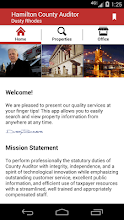
7. Dusty Rhodes County Auditor’s web site.

Dusty Rhodes has a nifty mobile app that has most of the property search information at your mobile fingertips as are available on his web site.  In fairness, it looks like it is an off-the-shelf app used by most Ohio Auditors.

Image result for hamilton county auditor mobile app

8. Credit Karma.

Free credit app information at your fingertips. Many lenders and Realtors have their clients download the app to understand how they will fare with lenders.  Constantly updated and reliable, Credit Karma is a great app and we recommend it. There are of course many other apps that can help with your credit scores as well including Credit Sesame, Nerd Wallet and Wallet Hub, as well as scores available directly from two of the credit rating services themselves: Experian and TransUnion.

Image result for credit karma mobile app

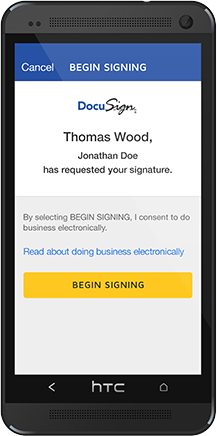
9. DocuSign.

Indispensable in today’s real estate marketplace are e-signatures and, of course, tehre are apps for that.  Each of Adobe Sign, DodLoop and DocuSign have mobile apps making e-signing even easier fro your phone.  We recommend DocuSign.

Image result for docusign mobile app

10. Around me.

OK, tihs nifty mole app is referred to as a “LifeStyle App. ” When showing or viewing a property, it tells you stores, restaurants, hospitals, movie theaters, and gas stations near the property. It helps buyers understand the neighborhood in which they are buying.

11. Magic Plan.

Magic Plan is another creative application that allows you to measure and draw any space.  In 3D.  For free.  Check it out!

Image result for magic plan mobile app

Conclusion

These are our top 11.  What are your ideas?

If you are considering a challenge to your Ohio real estate this year, please be aware that the deadline to file in March 31. This is a hard and fast deadline.

For the great majority of Ohio property owners, the rising real estate market means that the Auditor’s value may be on target, or even a little low. So before filing your complaint, make sure you are on strong footing for a reduction. Because, once a complaint is filed, the Board of Revision has three paths it can go down: reduction, retain the current value; or INCREASE. We do not want to see that third option.

The layups

If you purchased your property in the last two years for less than the current Auditor’s value, your case should be an easy layup to get a reduction to the purchase price. Assuming this was an arm’s length transaction (unrelated parties, market exposure, etc.), the Board of Revision should, under most circumstances, simply adopt that sale price – and perhaps without even having a hearing.

Even a small reduction can lead to a nice return to you. For instance, we were recently contacted by a homeowner who had purchased her home for ~$15,000 less than the Auditor’s value. That would result in approximately $250.00 of annual tax savings to the client. Not a lot of money, and not enough to justify paying an attorney to handle. But, the Board of Revision process is accessible to individuals without an attorney – particularly where the case involves a recent sale. For ten minutes time on the internet and the cost of stamp and envelope, this homeowner will save $250 per year over the next few years. $750-$1,000 over the next 3-4 years.

Some cases — Don’t try this at home!

Conversely, if you have recently purchased the property for more than the Auditor’s value, the Board of Revision will likely adopt that sale price and increase your value. DO NOT DO THIS TO YOURSELF.

The closer calls

  • If you have owned your property for a long time, the Auditor’s value may not accurately reflect the true value. In that instance, you would want to look to an appraiser to determine the value, or look to recent sales of comparable homes in your neighborhood. If the neighbor’s house just sold for $50,000 less than your home (and is generally comparable in age, condition, square footage, bedrooms), that may indicate that your value should be reduced to at or near that sale price. Ideally you will find multiple sales in your area to compare. Remember, school district is a major driver of value, so if the house across the street is in a different school district, that may not be a “comparable sale.”
  • The same is true of commercial properties. Age and changes in tenant occupancy can greatly affect value. It is a good business practice to regularly evaluate your real estate portfolio to make sure the Auditor’s value is accurate. For some businesses, correcting the value of the real estate portfolio can be the difference between profit and loss for the year.
  • If your property suffered a casualty loss, that may overcome the presumption that the sale price is the true value.

There are myriad scenarios, these are just a few.

Conclusion

Click here to learn more about our property valuation services and watch a presentation by Chris Finney.

Click here to fill out our property tax valuation form to have us contact you regarding your property valuation.

Contact Christopher P. Finney (513.943.6655) for more information.

Christopher P. Finney, founder of Finney Law Firm, LLC, was named among Cincy Leading Lawyers® and was be featured in the February, 2020 issue of Cincy Magazine.  According to the publication, hundreds of members of Greater Cincinnati’s legal community nominated colleagues for this honor, specifying a particular strength and area of practice for each, so it is a great distinction to be recognized by your peers.

ABOUT FINNEY LAW FIRM

In 2014, led by Christopher P. Finney, seven bright, hard-working attorneys and a dedicated and talented staff, came together to form Finney Law Firm.  Our team is committed to a unique practice of law that makes a positive difference for our clients by focusing on defining and then arriving at the best outcome for them. Finney Law Firm’s practice has extensive experience in the broad range of legal services that individuals and businesses may need:

  • Business formation and development
  • Real estate
  • Cincinnati landlord/tenant law
  • Estate planning and administration
  • Commercial dispute resolution
  • Public interest law
  • Labor and employment law
  • Bankruptcy
  • Personal Injury and Wrongful Death
  • Water Law
  • Affiliated Title Company – Ivy Pointe Title, LLC

“We work relentlessly to add value for our clients by applying cutting edge legal strategies and utilizing highly productive technology, said Finney.  This approach allows us to keep pace with the changing demands of our clients’ own challenging personal and business environments.

You may contact Chris Finney at 513.943.6655.

Frequently we encounter situations in which a buyer under a purchase contract, be it commercial or residential, desires to take occupancy of real estate before the closing (i.e, the tender of the purchase price).

A buyer may want early occupancy for a host of reasons. For both commercial and residential buyers, they many times desire occupancy before their financing can be formally approved. This might be because a commercial buyer desires to move or “rig” his manufacturing equipment into a property by a certain date. Many times commercial and residential buyers want to modify the property in some signifiant way such as moving walls, re-doing a kitchen or changing the electrical panel.

It also may be because the seller can’t close because of a title problem, or some other seller performance issue.

Does it legally make sense to allow for early occupancy? Is this a good idea?

From the buyer’s perspective

From the buyer’s perspective, it’s sort of a no-risk proposition, in that it gets the use and occupancy of the property without paying for it. And, as is discussed below, it gives the buyer the full chance to the the property for a “test drive,” before buying.

However, if the buyer is making a costly move or expensive improvements to the property, it should consider the “what if” if the seller can’t or won’t ultimately close.

From the seller’s perspective

But many of the reasons it makes sense for a buyer to take early occupancy are the precise reasons why it might be a bad idea for the seller to permit it.

First, by giving the buyer the right to a “test drive,” he invariably finds things with the property that are either defective or less than optimal, and then the buyer demands repairs or modifications before agreeing to close.

The reality is that a buyer needs a place to operate his business; he needs a place to live. Depriving a buyer of possession until he tenders the purchase price is strong leverage to force a closing.

But if the closing can’t occur because the seller can’t perform, such as a title problem, it may be a way to “keep the buyer”under contract for a later closing once the seller’s performance problem is resolved.

Removing a buyer from the property if he doesn’t close

Then, after early occupancy is granted, there is the problem if some exigency arises that prevents the buyer from closing: The financing is never approved, the buyer dies, a divorce, the business goes bankrupt, or a dispute among business partners arises. Any of these things can result in the buyer not closing pursuant to the contract, whether there is a contractual obligation to close or not.  So then what?

If that happens, the seller will have to legally remove a buyer from the property.

In the case of a residential occupant, regardless of the lack of justification of a tenant staying in the property, the owner must go through a judicial “forcible entry and detainer,” or eviction action. This can last from two to six months to judicially recover possession (and extreme circumstances, longer). In the case of a commercial occupant, they can be removed unilaterally (i.e., without court involvement) by the owner under certain circumstances. This article addresses non-judicial commercial set outs.

Nightmare scenarios

In addition to fighting to get property back from an occupant, there are circumstances in which an occupant does so much damage to a property it  is a nightmare for the seller: Property modifications and property damage such as to carpeting, doors, walls, and the like. Simply recovering possession can be only half the “cost” of a bad choice of allowing early occupancy. And as a landlord I can tell you: You simply can’t imagine the way some tenants live: Pet damage, holes in walls and doors, and destroyed carpet, all occurring in relatively short periods of time.

Unpermitted early occupancy

We also have encountered a situation in which buyer have just taken it upon themselves to “move into” a property with no permission forth seller.  As unimaginable as it seems, it has happened. We once had an out-of-state manufacturing client with a factory north of Dayton. They had moved out of the property to their home plant in Minnesota. They had no more personnel on the ground in Ohio. The buyer was a local gun manufacturer. Their equipment was huge milling and drilling machines that took hundreds of thousands of dollars for “rigging” to move. Thus buyer not only had the audacity to move into the property before closing, and commenced his manufacturing and shipping operations, all without the seller’s permission, they actually posted photos of their new facility on their company web site!

Our seller client, asked us for options, and we advised them to just “lock out” the tenant and let them suffer the consequences.  Boy, did that get their attention. Within hours of them finding the doors locked, they quickly found a way to get the transaction closed, and paid our client rent for the early occupancy, but also a penalty and our attorneys fees.

Insurance issues

Even allowing a buyer to “move his stuff into the garage” before closing can cause these “early occupancy” problems.  But one scenario to consider is that once a tenant occupies a property, it is no longer “owner occupied” and the property and casualty protection that exists on homes and businesses may not cover tenant incidents and tenant property. In one fact pattern with which I am familiar, the house burned to the ground after the tenant moved his furniture into the garage. In such scenario, the personal property of the tenant simply was not insured. Who is going to cover those losses?

Written agreement

In any event, if a buyer is going to take early occupancy, the parties should memorialize their agreement in writing: (i) What happens if the closing is further delayed? (ii) Is the tenant allowed to modify the property? (iii) is there a security deposit against damage? (iv) Who is responsible for insuring against personal injury, wrongful death, damage to the property itself and damage to the buyer’s personal property during the period of early occupancy? These are just some of the issues the early occupancy agreement should address.

Conclusion

In short, early occupancy is one of those things that might seem like a good idea a the time, but in retrospect it was unwise or even a nightmare. It should be undertaken only with open eyes and great caution by both parties, considering the “what if” if the closing never occurs, considering the insurance issues, considering potential property damages, and getting all aspects of the agreement in writing.

For assistance with your real estate needs, contact Isaac T. Heintz (513.943-6654) or Eli N. Krafte-Jacobs (513.797-2853).




Finney Law Firm is proud to announce that it has recently become AV Preeminent Rated by Martindale-Hubbell.  Martindale-Hubbell’s AV rating is the highest level of professional excellence at which a firm can be ranked in ability and ethics, and we are thrilled to join this elite group.

This rating is on top of the annual US News & World Report “Best Law Firms” rating that we have attained each year since the firm’s founding.

The Martindale-Hubbell Peer Review Ratings System is based on the confidential opinions of members of the Bar and the judiciary. Martindale-Hubbell representatives conduct personal interviews with other members of the Bar to discuss lawyers under review. A consensus from fifteen judges and practicing attorneys is necessary to produce a rating. In addition, confidential questionnaires are sent to lawyers and judges in the same geographic location and/or area of practice as the lawyer being rated. Members of the Bar are instructed to assess their colleague’s legal ability and general ethical standards. Lawyers’ ratings serve as an objective indicator of a firm’s ethical standards and professional ability.

Their web site explains the “A” and the “V” ratings:

Historically the Martindale-Hubbell® Peer Review Ratings™ system utilized an “A – B – C” scale to estimate the legal ability and ethical standards of an attorney. To qualify for an “A” rating an attorney had to be reported as “Very High” in their legal ability and had been practicing for at least 10 years, a “B” rating meant an attorney was rated “High” and had to be practicing for at least 5 years, and a “C” rating meant that the attorney was rated “fair” with no limitations on how long they were practicing. A second rating was also given to go along with the “A – B – C” rating and that was a “V,” meaning that the attorney’s peers stated they had “Very High” ethical standards. Over the years this transitioned to “AV”, “BV”, and “CV” ratings – with an “AV” rating meaning that the attorney had reached the highest of professional excellence and is recognized for the highest levels of skill and integrity.

We are pleased to have reached this gold standard by this distinguished organization who has recognized law firms for their high ethical standards and legal abilities for over a century.  In an environmental where the market for legal services is highly competitive, the AV Preeminent Rating is a vital tool for prospective clients to evaluate a law firm before engaging them for their services.  This rating provides the assurance that those needing legal services in the areas of Commercial and Residential Real Estate, Corporate Transactional, Business & Commercial Litigation, Labor & Employment Law, Estate Planning & Administration, Public Interest Law, Personal Injury and Property Tax Valuation will receive a superior level of professional experience.