Attorney Matt Okiishi

Congratulations is due to Finney Law Firm attorney Matt Okiishi who successfully sued today to force the Hamilton County Health Department to allow our client, Amazon Beauty Supply store in Finneytown, to remain open for business during the COVID-19 crisis.

The store, which sells beauty supplies, also markets soap, shampoo, other essential products and, most importantly, the much-sought-after N95 masks. The Hamilton County Health Department, noting that the store also sells non-essential supplies, had ordered them to be shuttered for the duration of the crisis, which for now extends through the end of May.

The business, an existing client of Finney Law Firm, asked us to sue to force the County to allow them to stay in business. We filed suit within 24 hours of first being contacted, and this afternoon our attorneys reached agreement with the attorneys from the Hamilton County Prosecutor’s office to remain open. The case was assigned to Judge Jody Luebbers who essentially told the parties to work the matter out amicably.  The parties did so, which included an agreement on the number of customers that would be permitted in the store at any one time.

Channel 12 carried the story this afternoon, and the video featuring attorney Matt Okiishi is here.

“There’s little more rewarding in the law,” said Finney Law Firm founder Chris Finney, “than standing an errant government official up in front of a Judge and making him account for his behavior. Today attorney Okiishi enjoyed that exercise and achieved the desired end for our client.”

____________________

For help when you need to stare down an over-zealous government actor, contact  Matt Okiishi (513.943.6659).

The recently enacted Families First Coronavirus Response Act requires employers to provide their employees with paid sick leave and expanded family and medical leave for specified reasons related to COVID-19. We recently blogged about the Act here.

These provisions will apply from April 1, 2020 through December 31, 2020. The US Department of Labor has issued a poster that employers are required to post in a conspicuous place, or make available to their employees on line. Here is a link to the poster:

The rapidity with which these laws have been passed and gone into effect is unprecedented in the field of employment law. If you have any questions or concerns about your rights and responsibilities under the Act, or regarding the posting of the required Notice, please feel free to reach out to us.


Thursday, April 2 (tomorrow) at 7 PM Finney Law Firm attorneys Christopher P. Finney and Rebecca L. Simpson will host a free webinar on the sweeping CARES Act, and in particular the Paycheck Protection Program (PPP) and Economic Injury Disaster Loans (EIDL), as well as forthcoming stimulus checks and changes to the unemployment compensation system. Additionally, on the call will be:
  • Employment attorney Stephen E. Imm of Finney Law Firm who can answer questions of employers and employees relating to workplace legal issues.
  • Melissa Knies, Commercial Banking Relationship Manager in the Commercial Banking Department of US Bank, who can answer questions from the banker’s perspective on these programs.
These programs, along with the stimulus checks and unemployment benefits, provide significant assistance in this time of health and economic crisis for the nation.
Click here to register for this free program.
If you have questions you want answered on the program, please feel free to share them in advance here, and we will try to be prepared to answer those.
Additionally, our prior email had a link to an SBA list with only a few qualifying banks. In fact, far more banks are making these loans. The broader and updated list is here.
Contact Christopher P. Finney (513.943.6655) or Rebecca L. Simpson (513.797.2856) for specific assistance for your company.

Here is the Ohio Stay-at-Home order.

Read it carefully, as it is not as broad as the reports of today’s press conference might lead you to believe.

For example, as it relates to Finney Law Firm, and Ivy Pointe Title, law firms, title companies, Realtors, insurance companies and lenders are all deemed essential and thus the purchase and sale of real estate can continue unless the closing of auditor’s and Recorder’s office (in Ohio) and Clerk’s offices (in Kentucky) cause title to become uninsurable.

What the order says

The meat of the order is:

All businesses and operations in the State except Essential Businesses and Operations as defined below, are required to cease all business activities within the State except Minimum Basic Operations, as defined below.

Moreover, all Essential Businesses and Operations are encouraged to remain open. In other words, unless you are forced to be closed, they want you to continue operating and presumably at full strength.

But the exceptions are incredibly broad

Then the order goes on to except or define as Essential Businesses and Operations, which is virtually everyone:

  • Working from home and home-based businesses
  • Food service providers (production, distribution, fulfillment, and storage)
  • The construction industry
  • Building management and maintenance
  • Airport operations
  • The entire utility industry
  • The oil and gas industry
  • Distribution centers
  • Garbage collectors
  • Computer and internet-related companies
  • All governmental functions
  • Grocery stores and pharmacies
  • Food, beverage and marijuana production (including farming, manufacturing, processing, and cultivating)
  • Animal shelters, rescues and kennels
  • Religious facilities
  • Media and news companies
  • Other first amendment speech activities, which would include activities relating to the primary and general elections, protests, and rallies.
  • Hardware stores and stores selling HVAC, plumbing or electrical equipment and materials
  • tradesmen such as plumbers, electricians, janitors, exterminators, painters and HVAC repairmen
  • Everyone involved in the postal or shipping industry
  • Schools that already have not been ordered closed as long as 6-feet of distance is maintained
  • Laundromats and dry cleaners
  • Restaurants for carryout food only
  • All means of transportation
  • Home-based healthcare
  • Professional services such as law, insurance, title and real estate
  • Banks and other lending institutions
  • Labor union functions
  • Hotels and motels
  • Funeral services

It also allows for travel:

  • To visit healthcare providers;
  • To obtain services from Human Service Operations, which include nursing homes, day cares, residential facilities for those with developmental disabilities and substance abuse issues, vocational services, rehabilitation services, adoption agencies, and those providing services to the indigent
  • To shop
  • To go to and from Essential Businesses and Operations

Enforcement

There is no enforcement mechanism for the Order, and indeed the Governor said as much in today’s press conference that they don’t intend to put anyone in jail for violating the Order. Thus, it is aspirational in nature, or perhaps just intended to get everyone’s attention to stop interacting with others as much as possible.

Conclusion

Certainly, the Governor intended something by the order, but given the incredibly broad exceptions, and the lack of any intent to enforce it, it appears to be an attempt to educate the public on the dangers of work and social interactions more than a heavy hand telling Ohio citizens what they can and cannot do in their work life.

Call our any of attorneys if we can advise you on COVID-19-related developments.

Christopher  Finney


We wanted you to know that Finney Law Firm remains open for business and continues daily to fully serve our clients.  However, the COVID-19 crisis is deadly serious, and without everyone’s cooperation, has the potential to endanger the lives of thousands of those we serve in Ohio and Kentucky and those we love.  Thus, we are taking aggressive and careful steps to protect you and our team in interactions with our office:

  • We have expanded our use of teleconferencing, e-signature, and other electronic communications to avoid person-to-person contact where it is not necessary.
  • Many of our attorneys and staff are now working from home where possible to limit person-to-person interactions. We have equipped our Team with laptops and other technology to assure the volume and quality of work remains the same.
  • We are carefully sanitizing each office daily, and conference rooms before and after each and every use.
  • We are asking clients not to bring children and any “extra” parties to the office.  Bring yourselves only.
  • If it is necessary to sign documents, we can come to your house or place of business to limit the number of persons with whom you are interacting. Let us know if you prefer this option.

Finney Law Firm wants to “Make a Difference” in your personal life and business for many years to come. In order to do that, we need to protect your health and that of our team.

Thank you for the trust you have placed in us for these many years.

Sincerely,

Christopher P.  Finney


Attorney Stephen E. Imm


The COVID-19 pandemic has dramatically affected every aspect of the Nation’s political, social, and economic life. It should not be surprising, then, that it has implications for employers in terms of their legal obligations to their employees.

Americans with Disabilities Act (“ADA”)

One major consideration is the obligations employers have to their employees under the Americans with Disabilities Act (“ADA”). The ADA limits the inquiries an employer can normally make about an employee’s medical status. So employers must be careful about asking any questions of employees related to the virus. Ordinarily, questions about medical conditions are permitted only when they are job-related, or when the employer has a reasonable belief that the employee poses a direct threat to the health and safety of themselves or others.

In practical terms, this means that you can require your employees to stay home when they are sick, and not to return until they have been symptom-free for a period of time. You may also be permitted to require proof that an employee does not have a fever. Broad, unrestricted questionnaires about medical history or status, however, can violate the ADA.

Employers can require that employees work from home during the pandemic. Note, however, that if an employee has an accommodation at the employer’s facility as a result of a disability, the same accommodation may be required for the employee to work from home.

Layoffs and reduced schedules

Additionally, many employers are being forced to consider layoffs or reduced schedules during this time, due to decreased economic activity. This raises wage and hour issues. In particular, questions arise as to whether certain employees may have to be paid their full rate of pay during periods of reduced activity.

The answers to these types of questions often depend on whether or not an employee is “exempt” or “non-exempt” under the Fair Labor Standards Act, which governs minimum wage and overtime issues. Generally, an exempt employee has to be paid his or her full salary for any week in which he or she performs any work for an employer. By contrast, non-exempt employees only have to be paid when they actually work.

Also, employers are required to keep track of the hours worked by non-exempt employees. If such employees are working from home, however, the normal ways of keeping track of those hours may not work, and alternatives may have to be considered and implemented.

Conclusion

These are very challenging times for everyone, employers included. Companies should reach out to qualified employment law counsel to make sure that they are not inadvertently running afoul of any of the Nation’s employment laws during this most difficult time.

Whether as an employee or an employer, for assistance with your employment law issues, please contact Stephen E. Imm at 513.943.5678.

There are a plethora of fantastic apps that help real estate professionals ply their trades from their cars, from the coffee shop, from a property you are viewing or from home on their phones.  Each of the apps listed here are available at the Apple Store and are free.  Many will also be available at Google Play.

We picked some we like at Finney Law Firm and polled some of our Realtor, lender and investor clients.  Here are the top ten:

1. Amortization calculators.

There are a host of apps for calculating mortgage payments and running amortization schedules.  The simplest one is “Mortgage Calculator for IPhone” and “Mortgage Calculator for

2. Zillow.

Zillow has revolutionized the real estate marketplace on the ,mobile platform.  It helps Realtors and mobile buyers find properties and their listing and sales information.

Image result for zillow mobile app

3. Gas buddy.

There is no longer a guessing game to find the cheapest fuel for the mobile professional. Gas Buddy instantly identifies the cheapest gas within range of your car or any zip code you select.

Image result for gas buddy mobile app

4. Social media.

Sorry, but it’s a scrum for the best social media platform to promote your business and communicate with your customers and potential customers.  Facebook clearly has the broadest reach, but YouTube, Twitter, Linkedin, and Instagram each have their audiences.  Today’s plugged-in (or wireless) real estate professional can’t live without these platforms.

Image result for facebook linkedin instagram and twitter logos

5. Genius scan.

If you had house plans or a plat of a development or subdivision, the only options were to buy a large-scale scanner for the office or to drive to Kinkos. Now, the coolest, fast and free option is Genius scan. You download it onto your cell phone, and just take a picture from a desk, conference table or dining room table of a plat and viola you have a clear PDF of any drawing.  This image can later be placed on any computer screen or printed.  It is life-changing.

Image result for genius scan mobile app

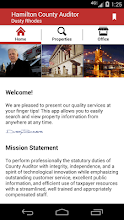
7. Dusty Rhodes County Auditor’s web site.

Dusty Rhodes has a nifty mobile app that has most of the property search information at your mobile fingertips as are available on his web site.  In fairness, it looks like it is an off-the-shelf app used by most Ohio Auditors.

Image result for hamilton county auditor mobile app

8. Credit Karma.

Free credit app information at your fingertips. Many lenders and Realtors have their clients download the app to understand how they will fare with lenders.  Constantly updated and reliable, Credit Karma is a great app and we recommend it. There are of course many other apps that can help with your credit scores as well including Credit Sesame, Nerd Wallet and Wallet Hub, as well as scores available directly from two of the credit rating services themselves: Experian and TransUnion.

Image result for credit karma mobile app

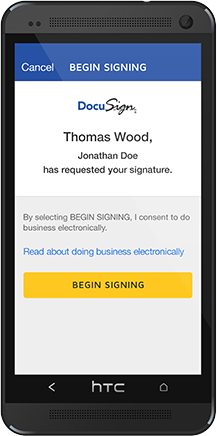
9. DocuSign.

Indispensable in today’s real estate marketplace are e-signatures and, of course, tehre are apps for that.  Each of Adobe Sign, DodLoop and DocuSign have mobile apps making e-signing even easier fro your phone.  We recommend DocuSign.

Image result for docusign mobile app

10. Around me.

OK, tihs nifty mole app is referred to as a “LifeStyle App. ” When showing or viewing a property, it tells you stores, restaurants, hospitals, movie theaters, and gas stations near the property. It helps buyers understand the neighborhood in which they are buying.

11. Magic Plan.

Magic Plan is another creative application that allows you to measure and draw any space.  In 3D.  For free.  Check it out!

Image result for magic plan mobile app

Conclusion

These are our top 11.  What are your ideas?

Christopher P. Finney, founder of Finney Law Firm, LLC, was named among Cincy Leading Lawyers® and was be featured in the February, 2020 issue of Cincy Magazine.  According to the publication, hundreds of members of Greater Cincinnati’s legal community nominated colleagues for this honor, specifying a particular strength and area of practice for each, so it is a great distinction to be recognized by your peers.

ABOUT FINNEY LAW FIRM

In 2014, led by Christopher P. Finney, seven bright, hard-working attorneys and a dedicated and talented staff, came together to form Finney Law Firm.  Our team is committed to a unique practice of law that makes a positive difference for our clients by focusing on defining and then arriving at the best outcome for them. Finney Law Firm’s practice has extensive experience in the broad range of legal services that individuals and businesses may need:

  • Business formation and development
  • Real estate
  • Cincinnati landlord/tenant law
  • Estate planning and administration
  • Commercial dispute resolution
  • Public interest law
  • Labor and employment law
  • Bankruptcy
  • Personal Injury and Wrongful Death
  • Water Law
  • Affiliated Title Company – Ivy Pointe Title, LLC

“We work relentlessly to add value for our clients by applying cutting edge legal strategies and utilizing highly productive technology, said Finney.  This approach allows us to keep pace with the changing demands of our clients’ own challenging personal and business environments.

You may contact Chris Finney at 513.943.6655.

Frequently we encounter situations in which a buyer under a purchase contract, be it commercial or residential, desires to take occupancy of real estate before the closing (i.e, the tender of the purchase price).

A buyer may want early occupancy for a host of reasons. For both commercial and residential buyers, they many times desire occupancy before their financing can be formally approved. This might be because a commercial buyer desires to move or “rig” his manufacturing equipment into a property by a certain date. Many times commercial and residential buyers want to modify the property in some signifiant way such as moving walls, re-doing a kitchen or changing the electrical panel.

It also may be because the seller can’t close because of a title problem, or some other seller performance issue.

Does it legally make sense to allow for early occupancy? Is this a good idea?

From the buyer’s perspective

From the buyer’s perspective, it’s sort of a no-risk proposition, in that it gets the use and occupancy of the property without paying for it. And, as is discussed below, it gives the buyer the full chance to the the property for a “test drive,” before buying.

However, if the buyer is making a costly move or expensive improvements to the property, it should consider the “what if” if the seller can’t or won’t ultimately close.

From the seller’s perspective

But many of the reasons it makes sense for a buyer to take early occupancy are the precise reasons why it might be a bad idea for the seller to permit it.

First, by giving the buyer the right to a “test drive,” he invariably finds things with the property that are either defective or less than optimal, and then the buyer demands repairs or modifications before agreeing to close.

The reality is that a buyer needs a place to operate his business; he needs a place to live. Depriving a buyer of possession until he tenders the purchase price is strong leverage to force a closing.

But if the closing can’t occur because the seller can’t perform, such as a title problem, it may be a way to “keep the buyer”under contract for a later closing once the seller’s performance problem is resolved.

Removing a buyer from the property if he doesn’t close

Then, after early occupancy is granted, there is the problem if some exigency arises that prevents the buyer from closing: The financing is never approved, the buyer dies, a divorce, the business goes bankrupt, or a dispute among business partners arises. Any of these things can result in the buyer not closing pursuant to the contract, whether there is a contractual obligation to close or not.  So then what?

If that happens, the seller will have to legally remove a buyer from the property.

In the case of a residential occupant, regardless of the lack of justification of a tenant staying in the property, the owner must go through a judicial “forcible entry and detainer,” or eviction action. This can last from two to six months to judicially recover possession (and extreme circumstances, longer). In the case of a commercial occupant, they can be removed unilaterally (i.e., without court involvement) by the owner under certain circumstances. This article addresses non-judicial commercial set outs.

Nightmare scenarios

In addition to fighting to get property back from an occupant, there are circumstances in which an occupant does so much damage to a property it  is a nightmare for the seller: Property modifications and property damage such as to carpeting, doors, walls, and the like. Simply recovering possession can be only half the “cost” of a bad choice of allowing early occupancy. And as a landlord I can tell you: You simply can’t imagine the way some tenants live: Pet damage, holes in walls and doors, and destroyed carpet, all occurring in relatively short periods of time.

Unpermitted early occupancy

We also have encountered a situation in which buyer have just taken it upon themselves to “move into” a property with no permission forth seller.  As unimaginable as it seems, it has happened. We once had an out-of-state manufacturing client with a factory north of Dayton. They had moved out of the property to their home plant in Minnesota. They had no more personnel on the ground in Ohio. The buyer was a local gun manufacturer. Their equipment was huge milling and drilling machines that took hundreds of thousands of dollars for “rigging” to move. Thus buyer not only had the audacity to move into the property before closing, and commenced his manufacturing and shipping operations, all without the seller’s permission, they actually posted photos of their new facility on their company web site!

Our seller client, asked us for options, and we advised them to just “lock out” the tenant and let them suffer the consequences.  Boy, did that get their attention. Within hours of them finding the doors locked, they quickly found a way to get the transaction closed, and paid our client rent for the early occupancy, but also a penalty and our attorneys fees.

Insurance issues

Even allowing a buyer to “move his stuff into the garage” before closing can cause these “early occupancy” problems.  But one scenario to consider is that once a tenant occupies a property, it is no longer “owner occupied” and the property and casualty protection that exists on homes and businesses may not cover tenant incidents and tenant property. In one fact pattern with which I am familiar, the house burned to the ground after the tenant moved his furniture into the garage. In such scenario, the personal property of the tenant simply was not insured. Who is going to cover those losses?

Written agreement

In any event, if a buyer is going to take early occupancy, the parties should memorialize their agreement in writing: (i) What happens if the closing is further delayed? (ii) Is the tenant allowed to modify the property? (iii) is there a security deposit against damage? (iv) Who is responsible for insuring against personal injury, wrongful death, damage to the property itself and damage to the buyer’s personal property during the period of early occupancy? These are just some of the issues the early occupancy agreement should address.

Conclusion

In short, early occupancy is one of those things that might seem like a good idea a the time, but in retrospect it was unwise or even a nightmare. It should be undertaken only with open eyes and great caution by both parties, considering the “what if” if the closing never occurs, considering the insurance issues, considering potential property damages, and getting all aspects of the agreement in writing.

For assistance with your real estate needs, contact Isaac T. Heintz (513.943-6654) or Eli N. Krafte-Jacobs (513.797-2853).




Finney Law Firm is proud to announce that it has recently become AV Preeminent Rated by Martindale-Hubbell.  Martindale-Hubbell’s AV rating is the highest level of professional excellence at which a firm can be ranked in ability and ethics, and we are thrilled to join this elite group.

This rating is on top of the annual US News & World Report “Best Law Firms” rating that we have attained each year since the firm’s founding.

The Martindale-Hubbell Peer Review Ratings System is based on the confidential opinions of members of the Bar and the judiciary. Martindale-Hubbell representatives conduct personal interviews with other members of the Bar to discuss lawyers under review. A consensus from fifteen judges and practicing attorneys is necessary to produce a rating. In addition, confidential questionnaires are sent to lawyers and judges in the same geographic location and/or area of practice as the lawyer being rated. Members of the Bar are instructed to assess their colleague’s legal ability and general ethical standards. Lawyers’ ratings serve as an objective indicator of a firm’s ethical standards and professional ability.

Their web site explains the “A” and the “V” ratings:

Historically the Martindale-Hubbell® Peer Review Ratings™ system utilized an “A – B – C” scale to estimate the legal ability and ethical standards of an attorney. To qualify for an “A” rating an attorney had to be reported as “Very High” in their legal ability and had been practicing for at least 10 years, a “B” rating meant an attorney was rated “High” and had to be practicing for at least 5 years, and a “C” rating meant that the attorney was rated “fair” with no limitations on how long they were practicing. A second rating was also given to go along with the “A – B – C” rating and that was a “V,” meaning that the attorney’s peers stated they had “Very High” ethical standards. Over the years this transitioned to “AV”, “BV”, and “CV” ratings – with an “AV” rating meaning that the attorney had reached the highest of professional excellence and is recognized for the highest levels of skill and integrity.

We are pleased to have reached this gold standard by this distinguished organization who has recognized law firms for their high ethical standards and legal abilities for over a century.  In an environmental where the market for legal services is highly competitive, the AV Preeminent Rating is a vital tool for prospective clients to evaluate a law firm before engaging them for their services.  This rating provides the assurance that those needing legal services in the areas of Commercial and Residential Real Estate, Corporate Transactional, Business & Commercial Litigation, Labor & Employment Law, Estate Planning & Administration, Public Interest Law, Personal Injury and Property Tax Valuation will receive a superior level of professional experience.